

Forging steering knuckles are critical components in today’s automotive world. They must withstand constant stress, operate in challenging environments, and ensure the wheels are stable and properly aligned. By choosing a forged steering knuckle, manufacturers and vehicle owners benefit from excellent mechanical properties and reliability. In this blog, we delve deep into the importance of forging steering knuckles, explore their manufacturing process, discuss materials and design, and explain how they bring superior performance to modern vehicles.
1. Significance of Forging Steering Knuckles
The steering knuckle is the crucial pivot point for the wheels, connecting the suspension and steering system together. A durable forging steering knuckle provides:
- Superior Strength: Forged parts exhibit outstanding toughness, making them ideal for carrying heavy loads.
- Longer Lifecycle: With better fatigue resistance, forging steering knuckles maintain performance over extended periods.
- Enhanced Safety: Properly manufactured knuckles help stabilize the vehicle’s steering and reduce the risk of failures.
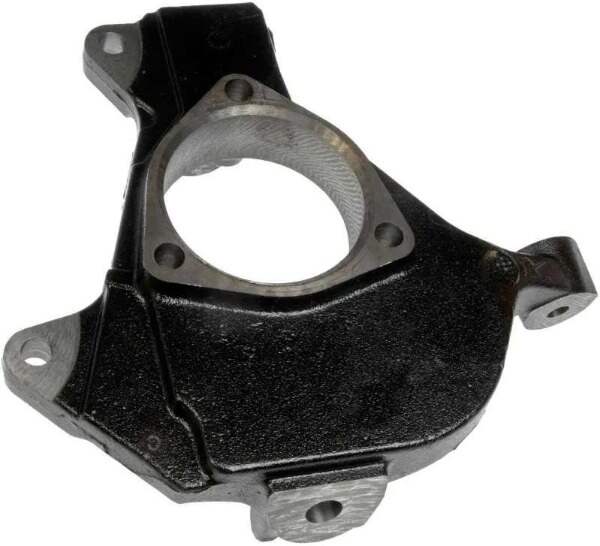
The example pictured below shows a heavy-duty forged steering knuckle designed for robust performance and longevity.
2. Forging Process and Its Advantages
Forging involves applying compressive force to shape heated metal into the desired configuration. This process refines the metal’s internal grain structure, thereby yielding parts with: